There are few journey experiences that ask as a lot of you as gorilla trekking. It isn’t designed for spectacle or consolation, nor does it supply prompt gratification. As a substitute, it calls for endurance, bodily effort, and a willingness to maneuver quietly, each via the forest and inside your self.
Excessive within the mist-covered forests of East and Central Africa, mountain gorillas reside in landscapes that really feel intentionally faraway from fashionable life. Dense vegetation closes in, the air thick with earth and rain, each step guided by trackers who learn damaged branches and bent leaves like a residing language.
The trek itself is a part of the story.
The Forest Units the Tempo
Gorilla trekking unfolds on the forest’s phrases. There aren’t any fastened paths, no predictable timelines. One morning’s stroll might final an hour; one other might stretch deep into the day. This uncertainty is intentional, a reminder that people are guests right here, not administrators.
The expertise strips journey again to one thing elemental. Telephones keep silent. Conversations soften. Consideration narrows to the instant: slippery roots underfoot, the sound of bugs shifting via leaves, the regular rhythm of respiration as altitude makes itself recognized.
When the trackers lastly pause, the forest appears to carry its breath.
Encounter With out Interruption
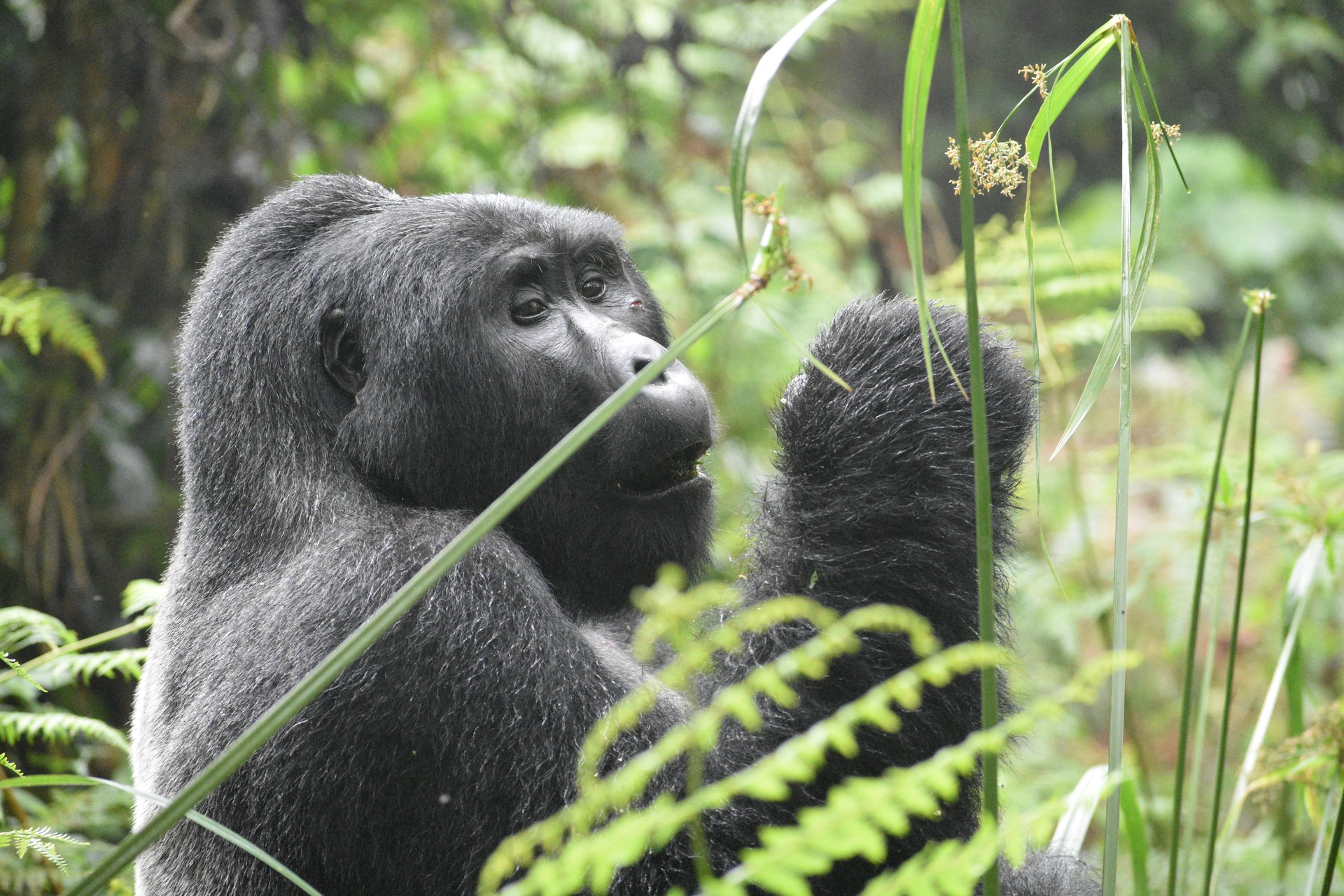
Seeing mountain gorillas within the wild is neither dramatic nor theatrical. There is no such thing as a grand reveal. Usually, the primary signal is a motion within the undergrowth, or the sound of a low grunt close by. Then out of the blue, they’re there, impossibly shut, unmistakably current.
What strikes most individuals isn’t their measurement, however their familiarity. A juvenile rolling via leaves. A silverback watching calmly, with out aggression or worry. The parallels to human behaviour are simple, but the gap between species stays respectfully intact.
Time with the gorillas is intentionally restricted. The hour passes rapidly, however its brevity reinforces the character of the encounter: significant as a result of it’s managed, protecting as a result of it’s restrained.
Conservation That Requires Restraint
Gorilla trekking exists solely due to rigorous conservation frameworks. Strict customer limits, well being protocols, and punctiliously managed habituation be certain that tourism doesn’t compromise the gorillas’ wellbeing.
This mannequin has remodeled conservation outcomes in areas the place mountain gorillas have been as soon as getting ready to extinction. Income from permits helps forest safety, veterinary care, and neighborhood growth, creating tangible incentives to protect habitats somewhat than exploit them.
It’s a uncommon instance of tourism functioning as a guardian somewhat than a risk.
Behind each gorilla trek is a community of individuals whose lives are intertwined with the forest. Trackers, rangers, porters, and guides usually come from close by communities, bringing generational information and a vested curiosity in conservation.
Their work is bodily, expert, and deeply private. For a lot of, defending gorillas isn’t an summary environmental trigger, however a livelihood that sustains households and futures. Partaking with them provides a fuller understanding of what accountable wildlife tourism seems to be like in follow.
Leaving Modified
Gorilla trekking doesn’t supply simple narratives or shiny pictures. It provides one thing quieter and extra enduring, perspective. The expertise leaves many travellers with a heightened consciousness of vulnerability, interdependence, and the implications of human presence.
Strolling again via the forest, the world feels barely recalibrated. The tempo slows. Priorities shift. The encounter lingers not as a result of it was uncommon, however as a result of it was dealt with with care.
In a journey panorama usually outlined by extra, gorilla trekking stands aside. It isn’t about entry, however about respect, and the understanding that a few of the world’s strongest experiences are these we strategy gently.

There are few journey experiences that ask as a lot of you as gorilla trekking. It isn’t designed for spectacle or consolation, nor does it supply prompt gratification. As a substitute, it calls for endurance, bodily effort, and a willingness to maneuver quietly, each via the forest and inside your self.
Excessive within the mist-covered forests of East and Central Africa, mountain gorillas reside in landscapes that really feel intentionally faraway from fashionable life. Dense vegetation closes in, the air thick with earth and rain, each step guided by trackers who learn damaged branches and bent leaves like a residing language.
The trek itself is a part of the story.
The Forest Units the Tempo
Gorilla trekking unfolds on the forest’s phrases. There aren’t any fastened paths, no predictable timelines. One morning’s stroll might final an hour; one other might stretch deep into the day. This uncertainty is intentional, a reminder that people are guests right here, not administrators.
The expertise strips journey again to one thing elemental. Telephones keep silent. Conversations soften. Consideration narrows to the instant: slippery roots underfoot, the sound of bugs shifting via leaves, the regular rhythm of respiration as altitude makes itself recognized.
When the trackers lastly pause, the forest appears to carry its breath.
Encounter With out Interruption
Seeing mountain gorillas within the wild is neither dramatic nor theatrical. There is no such thing as a grand reveal. Usually, the primary signal is a motion within the undergrowth, or the sound of a low grunt close by. Then out of the blue, they’re there, impossibly shut, unmistakably current.
What strikes most individuals isn’t their measurement, however their familiarity. A juvenile rolling via leaves. A silverback watching calmly, with out aggression or worry. The parallels to human behaviour are simple, but the gap between species stays respectfully intact.
Time with the gorillas is intentionally restricted. The hour passes rapidly, however its brevity reinforces the character of the encounter: significant as a result of it’s managed, protecting as a result of it’s restrained.
Conservation That Requires Restraint
Gorilla trekking exists solely due to rigorous conservation frameworks. Strict customer limits, well being protocols, and punctiliously managed habituation be certain that tourism doesn’t compromise the gorillas’ wellbeing.
This mannequin has remodeled conservation outcomes in areas the place mountain gorillas have been as soon as getting ready to extinction. Income from permits helps forest safety, veterinary care, and neighborhood growth, creating tangible incentives to protect habitats somewhat than exploit them.
It’s a uncommon instance of tourism functioning as a guardian somewhat than a risk.
Behind each gorilla trek is a community of individuals whose lives are intertwined with the forest. Trackers, rangers, porters, and guides usually come from close by communities, bringing generational information and a vested curiosity in conservation.
Their work is bodily, expert, and deeply private. For a lot of, defending gorillas isn’t an summary environmental trigger, however a livelihood that sustains households and futures. Partaking with them provides a fuller understanding of what accountable wildlife tourism seems to be like in follow.
Leaving Modified
Gorilla trekking doesn’t supply simple narratives or shiny pictures. It provides one thing quieter and extra enduring, perspective. The expertise leaves many travellers with a heightened consciousness of vulnerability, interdependence, and the implications of human presence.
Strolling again via the forest, the world feels barely recalibrated. The tempo slows. Priorities shift. The encounter lingers not as a result of it was uncommon, however as a result of it was dealt with with care.
In a journey panorama usually outlined by extra, gorilla trekking stands aside. It isn’t about entry, however about respect, and the understanding that a few of the world’s strongest experiences are these we strategy gently.
There are few journey experiences that ask as a lot of you as gorilla trekking. It isn’t designed for spectacle or consolation, nor does it supply prompt gratification. As a substitute, it calls for endurance, bodily effort, and a willingness to maneuver quietly, each via the forest and inside your self.
Excessive within the mist-covered forests of East and Central Africa, mountain gorillas reside in landscapes that really feel intentionally faraway from fashionable life. Dense vegetation closes in, the air thick with earth and rain, each step guided by trackers who learn damaged branches and bent leaves like a residing language.
The trek itself is a part of the story.
The Forest Units the Tempo
Gorilla trekking unfolds on the forest’s phrases. There aren’t any fastened paths, no predictable timelines. One morning’s stroll might final an hour; one other might stretch deep into the day. This uncertainty is intentional, a reminder that people are guests right here, not administrators.
The expertise strips journey again to one thing elemental. Telephones keep silent. Conversations soften. Consideration narrows to the instant: slippery roots underfoot, the sound of bugs shifting via leaves, the regular rhythm of respiration as altitude makes itself recognized.
When the trackers lastly pause, the forest appears to carry its breath.
Encounter With out Interruption
Seeing mountain gorillas within the wild is neither dramatic nor theatrical. There is no such thing as a grand reveal. Usually, the primary signal is a motion within the undergrowth, or the sound of a low grunt close by. Then out of the blue, they’re there, impossibly shut, unmistakably current.
What strikes most individuals isn’t their measurement, however their familiarity. A juvenile rolling via leaves. A silverback watching calmly, with out aggression or worry. The parallels to human behaviour are simple, but the gap between species stays respectfully intact.
Time with the gorillas is intentionally restricted. The hour passes rapidly, however its brevity reinforces the character of the encounter: significant as a result of it’s managed, protecting as a result of it’s restrained.
Conservation That Requires Restraint
Gorilla trekking exists solely due to rigorous conservation frameworks. Strict customer limits, well being protocols, and punctiliously managed habituation be certain that tourism doesn’t compromise the gorillas’ wellbeing.
This mannequin has remodeled conservation outcomes in areas the place mountain gorillas have been as soon as getting ready to extinction. Income from permits helps forest safety, veterinary care, and neighborhood growth, creating tangible incentives to protect habitats somewhat than exploit them.
It’s a uncommon instance of tourism functioning as a guardian somewhat than a risk.
Behind each gorilla trek is a community of individuals whose lives are intertwined with the forest. Trackers, rangers, porters, and guides usually come from close by communities, bringing generational information and a vested curiosity in conservation.
Their work is bodily, expert, and deeply private. For a lot of, defending gorillas isn’t an summary environmental trigger, however a livelihood that sustains households and futures. Partaking with them provides a fuller understanding of what accountable wildlife tourism seems to be like in follow.
Leaving Modified
Gorilla trekking doesn’t supply simple narratives or shiny pictures. It provides one thing quieter and extra enduring, perspective. The expertise leaves many travellers with a heightened consciousness of vulnerability, interdependence, and the implications of human presence.
Strolling again via the forest, the world feels barely recalibrated. The tempo slows. Priorities shift. The encounter lingers not as a result of it was uncommon, however as a result of it was dealt with with care.
In a journey panorama usually outlined by extra, gorilla trekking stands aside. It isn’t about entry, however about respect, and the understanding that a few of the world’s strongest experiences are these we strategy gently.
There are few journey experiences that ask as a lot of you as gorilla trekking. It isn’t designed for spectacle or consolation, nor does it supply prompt gratification. As a substitute, it calls for endurance, bodily effort, and a willingness to maneuver quietly, each via the forest and inside your self.
Excessive within the mist-covered forests of East and Central Africa, mountain gorillas reside in landscapes that really feel intentionally faraway from fashionable life. Dense vegetation closes in, the air thick with earth and rain, each step guided by trackers who learn damaged branches and bent leaves like a residing language.
The trek itself is a part of the story.
The Forest Units the Tempo
Gorilla trekking unfolds on the forest’s phrases. There aren’t any fastened paths, no predictable timelines. One morning’s stroll might final an hour; one other might stretch deep into the day. This uncertainty is intentional, a reminder that people are guests right here, not administrators.
The expertise strips journey again to one thing elemental. Telephones keep silent. Conversations soften. Consideration narrows to the instant: slippery roots underfoot, the sound of bugs shifting via leaves, the regular rhythm of respiration as altitude makes itself recognized.
When the trackers lastly pause, the forest appears to carry its breath.
Encounter With out Interruption
Seeing mountain gorillas within the wild is neither dramatic nor theatrical. There is no such thing as a grand reveal. Usually, the primary signal is a motion within the undergrowth, or the sound of a low grunt close by. Then out of the blue, they’re there, impossibly shut, unmistakably current.
What strikes most individuals isn’t their measurement, however their familiarity. A juvenile rolling via leaves. A silverback watching calmly, with out aggression or worry. The parallels to human behaviour are simple, but the gap between species stays respectfully intact.
Time with the gorillas is intentionally restricted. The hour passes rapidly, however its brevity reinforces the character of the encounter: significant as a result of it’s managed, protecting as a result of it’s restrained.
Conservation That Requires Restraint
Gorilla trekking exists solely due to rigorous conservation frameworks. Strict customer limits, well being protocols, and punctiliously managed habituation be certain that tourism doesn’t compromise the gorillas’ wellbeing.
This mannequin has remodeled conservation outcomes in areas the place mountain gorillas have been as soon as getting ready to extinction. Income from permits helps forest safety, veterinary care, and neighborhood growth, creating tangible incentives to protect habitats somewhat than exploit them.
It’s a uncommon instance of tourism functioning as a guardian somewhat than a risk.
Behind each gorilla trek is a community of individuals whose lives are intertwined with the forest. Trackers, rangers, porters, and guides usually come from close by communities, bringing generational information and a vested curiosity in conservation.
Their work is bodily, expert, and deeply private. For a lot of, defending gorillas isn’t an summary environmental trigger, however a livelihood that sustains households and futures. Partaking with them provides a fuller understanding of what accountable wildlife tourism seems to be like in follow.
Leaving Modified
Gorilla trekking doesn’t supply simple narratives or shiny pictures. It provides one thing quieter and extra enduring, perspective. The expertise leaves many travellers with a heightened consciousness of vulnerability, interdependence, and the implications of human presence.
Strolling again via the forest, the world feels barely recalibrated. The tempo slows. Priorities shift. The encounter lingers not as a result of it was uncommon, however as a result of it was dealt with with care.
In a journey panorama usually outlined by extra, gorilla trekking stands aside. It isn’t about entry, however about respect, and the understanding that a few of the world’s strongest experiences are these we strategy gently.